Kingdom Protista
NCERT Class 11 Biology Chapter 2 Section 2.2
Quick answer
NCERT groups many single-celled eukaryotes in Protista, mostly aquatic with a true nucleus and membrane-bound organelles; unicellular yeasts remain in Fungi. It includes chrysophytes, dinoflagellates, euglenoids, slime moulds and protozoans, while acknowledging uncertain boundaries. Diatoms have silica walls, euglenoids a flexible pellicle, and protozoans include amoeboid, flagellated, ciliated and sporozoan groups.
With your textbook
NCERT Biology (Class 11), Chapter 2 “Biological Classification”, Section 2.2 “Kingdom Protista”, pages 14–16.
Open the official NCERT chapter (PDF, 3.3 MB, ncert.nic.in) (opens in a new tab)
Checked against the 2026-27 reprint on .
What is Kingdom Protista?
Kingdom Protista
All single-celled eukaryotes are placed under Protista, but the boundaries of this kingdom are not well defined.
NCERT Biology (Class 11), Section 2.2, page 14
- NCERT includes five groups: chrysophytes, dinoflagellates, euglenoids, slime moulds and protozoans.
- Protists are eukaryotes, mostly aquatic; some have flagella or cilia.
Being eukaryotes, the protistan cell body contains a well defined nucleus and other membrane-bound organelles.
NCERT Biology (Class 11), Section 2.2, page 14
In plain words: Protista collects the single-celled organisms that have a true nucleus. Some photosynthesise like plants, some hunt like animals, and some feed on decaying matter like fungi, and NCERT says the kingdom forms a link with the plant, animal and fungal kingdoms (page 14). What one biologist calls a photosynthetic protist, another may call a plant. NCERT does both: Chapter 2 places Chlamydomonas in Protista (page 12), while Chapter 3 lists it among the common green algae (page 26). The kingdom’s edges are fuzzy. Also, the word “all” in the quoted summary has an important NCERT exception: unicellular yeasts are Fungi, so a nucleus plus unicellularity alone does not establish Protista.
Protists reproduce asexually and sexually by a process involving cell fusion and zygote formation.
NCERT Biology (Class 11), Section 2.2, page 14
Chrysophytes
This group includes diatoms and golden algae, found in fresh water and the sea. They are microscopic and float passively in water currents (plankton), and most are photosynthetic (page 14).
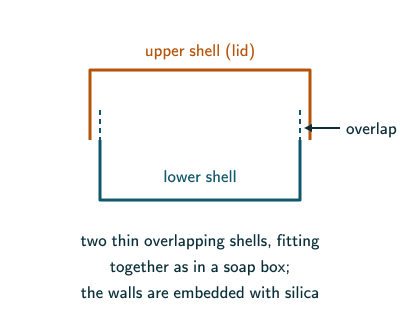
In diatoms the cell walls form two thin overlapping shells, which fit together as in a soap box.
NCERT Biology (Class 11), Section 2.2.1, page 14
The silica-rich walls can persist and accumulate as diatomaceous earth. NCERT calls the walls “indestructible” and describes their long accumulation (page 14). Beyond NCERT: “indestructible” is not literal—experimental studies in Limnology and Oceanography show that diatom silica can dissolve. Preservation and accumulation depend on environmental conditions. Being gritty, it is used in polishing and in the filtration of oils and syrups (page 14).
Diatoms are the chief ‘producers’ in the oceans.
NCERT Biology (Class 11), Section 2.2.1, page 14
For NEET, follow NCERT: chrysophytes include diatoms and golden algae (desmids), so place desmids in chrysophytes (page 14). Beyond the NCERT text: most biologists classify desmids as green algae.
Dinoflagellates
Dinoflagellates are mostly marine and photosynthetic, and appear yellow, green, brown, blue or red depending on their main pigments (page 15). Their cell wall has stiff cellulose plates on the outside. Most have two flagella: one lies along the length of the cell and the other across it, in a furrow between the wall plates. Red dinoflagellates such as Gonyaulax can multiply so fast that the sea looks red (red tides), and the toxins they release may even kill fishes and other marine animals.
Euglenoids
Most euglenoids live in stagnant fresh water.
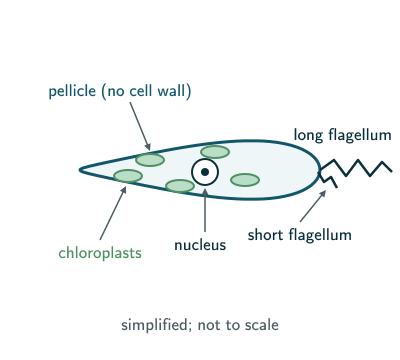
Instead of a cell wall, they have a protein rich layer called pellicle which makes their body flexible.
NCERT Biology (Class 11), Section 2.2.3, page 15
NCERT describes two flagella, a short and a long one. NCERT describes photosynthesis in sunlight and heterotrophy by predation in its absence (page 15), with Euglena as its example. Beyond NCERT: heterotrophy does not necessarily mean engulfing prey. The experimental study “Euglena gracilis growth and cell composition under different temperature, light and trophic conditions” shows Euglena gracilis growing in darkness using dissolved glucose. Do not infer that all photosynthetic euglenoids must eat smaller organisms in the dark.
Interestingly, the pigments of euglenoids are identical to those present in higher plants.
NCERT Biology (Class 11), Section 2.2.3, page 15
Slime moulds
Slime moulds are saprophytic protists.
NCERT Biology (Class 11), Section 2.2.4, page 15
The body moves along decaying twigs and leaves, engulfing organic material. Under suitable conditions slime moulds form an aggregation called a plasmodium, which may spread over several feet. In unfavourable conditions the plasmodium forms fruiting bodies bearing spores at their tips. The spores have true walls, are extremely resistant, survive for many years and are dispersed by air currents (page 15).
Protozoans
All protozoans are heterotrophs and live as predators or parasites. They are believed to be primitive relatives of animals.
NCERT Biology (Class 11), Section 2.2.5, page 15
NCERT describes four major groups (pages 15–16):
- Amoeboid protozoans live in fresh water, sea water or moist soil and move and capture prey with pseudopodia (false feet), as in Amoeba. Marine forms have silica shells; some, such as Entamoeba, are parasites.
- Flagellated protozoans have flagella and are free-living or parasitic; Trypanosoma causes sleeping sickness.
- Ciliated protozoans move actively with thousands of cilia and have a gullet; example Paramoecium.
- Sporozoans have an infectious spore-like stage in their life cycle; Plasmodium causes malaria.
In ciliates, the coordinated beating of rows of cilia steers water laden with food into the gullet (page 16). Malaria, caused by Plasmodium, has a staggering effect on the human population (page 16).
Solved examples
Example 1: The diatom wall (NCERT Exercise Q3)
What is the nature of the cell walls in diatoms?
Answer: two thin overlapping shells that fit together as in a soap box, rich in silica and capable of leaving persistent deposits that form diatomaceous earth; NCERT calls them “indestructible”, but silica can dissolve (NCERT page 14).
Example 2: Red tides (NCERT Exercise Q4)
What do the terms ‘algal bloom’ and ‘red tides’ signify?
NCERT page 13 says cyanobacteria often form blooms in polluted water bodies; page 15 says red dinoflagellates such as Gonyaulax multiply so fast that the sea appears red.
Answer: an algal bloom is a very dense growth of algae in a water body, such as the blooms cyanobacteria (blue-green algae) often form in polluted water (page 13). NCERT’s red-tide example is rapid growth of dinoflagellates such as Gonyaulax, discolouring water and sometimes releasing fish-killing toxins (page 15). Beyond NCERT, NOAA explains that harmful blooms are not necessarily red, and not every bloom is harmful.
Example 3: Euglenoids (NCERT Exercise Q10)
What are the characteristic features of euglenoids?
Answer: mostly fresh-water organisms of stagnant water; a protein-rich pellicle instead of a cell wall, which keeps the body flexible; two flagella, one short and one long; photosynthetic in sunlight, with heterotrophy in the dark (NCERT describes predation, while some euglenoids use dissolved organic nutrients); pigments identical to those of higher plants (example Euglena).
Example 4: The four protozoans (NCERT Exercise Q6)
Describe briefly the four major groups of Protozoa.
Answer: amoeboid protozoans move and capture prey with pseudopodia (Amoeba; Entamoeba is parasitic); flagellated protozoans have flagella, and parasitic forms cause sleeping sickness (Trypanosoma); ciliated protozoans have thousands of cilia and a gullet (Paramoecium); sporozoans have an infectious spore-like stage (Plasmodium, which causes malaria).
Example 5: A protist that behaves like a fungus
Which protists are saprophytic, and how do they survive bad conditions?
Answer: slime moulds; their plasmodium forms fruiting bodies with spores that have true walls and can survive for many years (NCERT page 15).
Example 6: How Protista links the kingdoms
How do protists form a link with the plant, animal and fungal kingdoms?
Answer: its members include plant-like photosynthetic forms (chrysophytes, dinoflagellates, euglenoids), fungus-like saprophytes (slime moulds) and animal-like heterotrophs (protozoans).
Common mistakes to avoid
Common mistake
Giving euglenoids a cell wall
Euglenoids have no cell wall; their protein-rich pellicle keeps them flexible.
Common mistake
Calling protozoans autotrophs
All protozoans are heterotrophs, living as predators or parasites.
Common mistake
Forgetting where the cellulose is
Dinoflagellates have stiff cellulose plates on the outer surface of the wall; diatom walls are embedded with silica.
Common mistake
Blaming red algae for red tides
Red tides are caused by red dinoflagellates such as Gonyaulax (Protista, page 15), not by the red algae (Rhodophyceae) of Plantae. Blooms in polluted water (page 13) are formed by cyanobacteria (Monera).
Common mistake
Confusing plasmodium with *Plasmodium*
A slime mould’s plasmodium is an aggregation that may spread over several feet (page 15); Plasmodium, the sporozoan, causes malaria (page 16).
Quick revision summary
- Protista: NCERT’s broad grouping of single-celled eukaryotes, with yeasts retained in Fungi; boundaries not well defined; mostly aquatic; a link with plants, animals and fungi.
- Chrysophytes (diatoms and golden algae, called desmids by NCERT): soap-box walls with silica; diatomaceous earth; chief producers of the oceans.
- Dinoflagellates: mostly marine; cellulose plates; two flagella in furrows; red tides (Gonyaulax).
- Euglenoids: pellicle, no wall; two flagella (short and long); photosynthetic or heterotrophic; plant-like pigments (Euglena).
- Slime moulds: saprophytic; plasmodium; spores with true walls, dispersed by air.
- Protozoans: heterotrophs, primitive relatives of animals; amoeboid, flagellated, ciliated and sporozoan groups.
Formula sheet
- Protista: single-celled eukaryotes
- diatoms: two overlapping silica shells (soap box)
- dinoflagellates: cellulose plates; red tides
- euglenoids: pellicle, two flagella, plant pigments
- slime moulds: saprophytic; plasmodium; resistant spores
- protozoans: amoeboid, flagellated, ciliated, sporozoans
Questions students ask
What is the difference between Kingdom Monera and Kingdom Protista?
Kingdom Monera contains prokaryotes, the bacteria, whose cells have no nuclear membrane, while Kingdom Protista contains single-celled eukaryotes, with a well-defined nucleus and other membrane-bound organelles. In NCERT Table 2.1 the cell wall of Monera is non-cellulosic (polysaccharide + amino acid), whereas a cell wall is present only in some protists; both kingdoms are cellular and include autotrophs and heterotrophs, but only Monera has chemosynthetic autotrophs. Examples: Nostoc and Anabaena in Monera; Euglena, Paramoecium and Plasmodium in Protista.
Is Euglena a plant or an animal?
Euglena is neither a plant nor an animal in the five kingdom classification: it is a euglenoid, a single-celled eukaryote placed in Kingdom Protista. It is plant-like in photosynthesising in sunlight, with pigments identical to those of higher plants, and animal-like in having no cell wall and, when deprived of sunlight, feeding heterotrophically; NCERT describes predation, but dissolved organic nutrients support some species; it swims with its two flagella. Organisms like this illustrate NCERT’s remark that Protista forms a link with the other kingdoms, those of plants, animals and fungi.
What is the difference between Euglena and Paramoecium?
Euglena is a euglenoid that photosynthesises in sunlight and moves with two flagella, a short and a long one, while Paramoecium is a ciliated protozoan, always heterotrophic, that moves actively with thousands of cilia and has a gullet. Both are single-celled protists without a cell wall (Euglena has a flexible, protein-rich pellicle instead), and Paramoecium, like Amoeba, was earlier placed in the animal kingdom. NCERT writes the name Paramoecium; the standard spelling of the genus is Paramecium.
What is the difference between diatoms and dinoflagellates?
Diatoms and dinoflagellates are both mostly photosynthetic protists, but diatoms are chrysophytes, found in fresh water and the sea, with walls of two thin overlapping shells embedded with silica that fit together like a soap box, while dinoflagellates are mostly marine, with stiff cellulose plates on the outer surface of the wall and, in most, two flagella. Diatoms float passively as plankton, and their resistant walls can accumulate as diatomaceous earth (they are not literally indestructible); red dinoflagellates such as Gonyaulax can multiply so fast that the sea appears red (red tides), and their toxins may kill fishes. NCERT calls diatoms the chief ‘producers’ in the oceans.
What is the difference between Protista and protozoa?
Protista is NCERT’s broad grouping of single-celled eukaryotes, with exceptions such as yeasts retained in Fungi, while protozoans are only one of the five groups NCERT places in it: the heterotrophs that live as predators or parasites and are believed to be primitive relatives of animals. So every protozoan, such as Amoeba or Plasmodium, is a protist, but many protists are not protozoans: chrysophytes, dinoflagellates and euglenoids are mostly photosynthetic, and slime moulds are saprophytic.
Are slime moulds fungi?
Slime moulds are not fungi in the five kingdom classification: NCERT places them in Kingdom Protista as saprophytic protists, although their name and their spore-bearing fruiting bodies suggest fungi. A slime mould’s body moves along decaying twigs and leaves, engulfing organic material, and under suitable conditions forms a spreading aggregation called a plasmodium. A typical fungus instead grows as a network of hyphae, the mycelium, absorbs soluble organic matter, and has cell walls of chitin and polysaccharides.
Practice questions
Try each question first, then open the answer to check your working.
-
Q1. Name the five groups NCERT includes in Protista.
Show answerHide answer
Chrysophytes, dinoflagellates, euglenoids, slime moulds and protozoans (NCERT page 14).
-
Q2. Which disease is caused by Trypanosoma, and which by Plasmodium?
Show answerHide answer
Sleeping sickness (Trypanosoma) and malaria (Plasmodium) (NCERT page 16).
-
Q3. How do dinoflagellates get their different colours?
Show answerHide answer
They appear yellow, green, brown, blue or red depending on the main pigments present in their cells (NCERT page 15).
-
Q4. What is diatomaceous earth used for?
Show answerHide answer
Being gritty, it is used in polishing and in the filtration of oils and syrups (NCERT page 14).